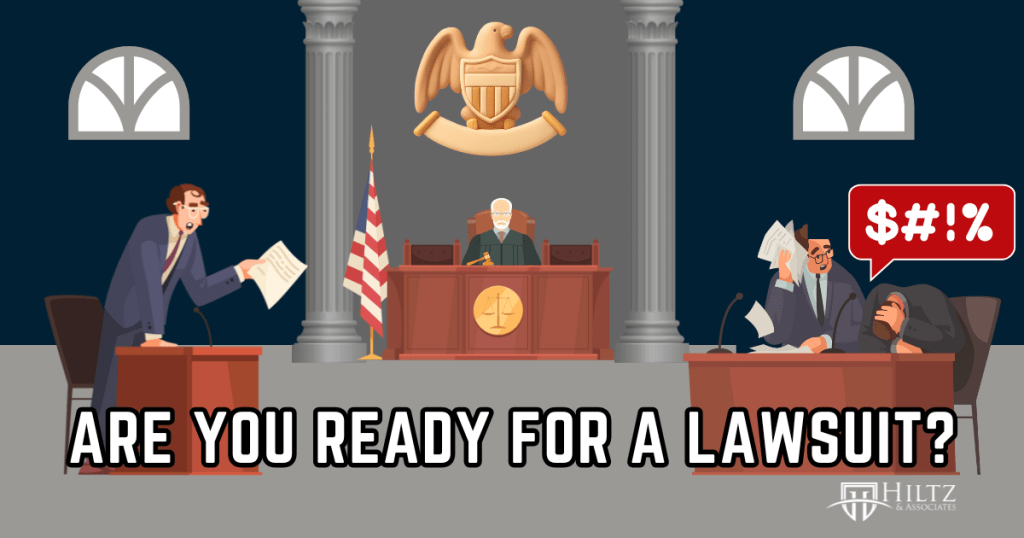
Are you ready for a lawsuit?
It’s a fact. Dentistry is one of the most litigated professions.
The reality for most dentists is that they can expect to be named in two or more lawsuits during their career, with most involving negligence claims related to the delivery and management of patient care.
Today, more dental practices use digital technology to document and deliver patient care than ever before – and the electronic dental record (“EDR”)has virtually replaced traditional paper and film as the preferred documentation choice.
Did you know that “documentation issues” account for 1 in 3 negligence claims ** and account for one-third of the money paid out to settle dental negligence claims?
** MedPro Understanding Dental Malpractice Cases: Answers to Common Questions
Producing Electronic Dental Records
When confronted with a negligence claim, you will be required to produce copies of the patient’s EDR, which are then given to the patient’s attorneys.
The patient’s attorneys will scrutinize your electronic dental records to look for any inconsistencies, omissions, late entries or potentially fraudulent information that could be challenged in court, or used to bolster their negligence claim.
Documentation Issues in Negligence Claims
A lack of effective documentation is common in dental malpractice claims with omissions, gaps, and timing issues the primary cause.
- Omission – a lack of detail or too little information in a patient note.
- Gaps – failure to include notes about a patient encounter. (e.g.: failure to document a follow up phone call or conversation with the patient)
- Timing – late entries. (e.g.: altering records that pertain to the incident in the lawsuit and the plaintiff in general. Altering your dental records will almost certainly have consequences, which can affect litigation.
So, before a legal challenge comes knocking on the door, every dentist should have established written procedures regarding how their electronic dental records are managed and stored.
If you can demonstrate that your electronic dental records represent a true account of the events, then you are more likely to achieve a positive result in a legal dispute.
..and every dentist should conduct a quality audit of their current documentation procedures and develop a remediation plan.
IT IS ESSENTIAL TO SIGN YOUR DIGITAL NOTES
Digitally sign your clinical notes in a consistent and timely manner. An unsigned or “unlocked” clinical note is an open-door for plaintiff arguments in a negligence claim. Even if your clinical note is accurate and complete, because it was left unsigned it can be challenged. This puts the the onus you to prove that the note is original and remained unaltered.
When you electronically sign (“lock”) your clinical notes, you are attesting to the authenticity and accuracy of the transcript. This can demonstrate in court that your notes were not modified or altered since they were first entered.
If you are named in a negligence claim, do not alter or change your clinical notes after the fact.
Speak with your attorney before changing or adding notes to the plaintiff’s dental records.
What does MedPro recommend?
Med-Pro (a major underwriter of dental malpractice insurance) has an excellent “documentation checklist” for dentists and dental specialists that you can download using the link below.
https://www.medpro.com/documents/10502/2899801/Checklist_Documentation+Essentials.pdf
Digital Forensics can identify treasure troves of evidence on a Dental Computer.
Digital forensics is used to examine the data and metadata created by dental software programs that dentists use each day.
In a negligence claim, digital forensics can be used to examine the data and metadata surrounding clinical records, radiograph images, patient encounters and system logs to establish a timeline trail of evidence. This can help attorneys reconstruct events, verify the accuracy of claims, and substantiate or deny witness accounts.
In cases of embezzlement or unethical business conduct, digital forensics is used to examine transactional data to uncover evidence of theft and help to identify the person responsible.